
If you’re prepping for GPAT, you’ve probably typed “gpat total marks” into Google more than once — usually at 1 a.m., half-anxious, half-curious. Don’t worry, you’re not alone. Every pharmacy student who’s eyeing an M Pharm seat or a PSU job goes through this same scramble to understand how the exam is actually scored. Let’s break it down together, in plain language, no jargon overload.
What Is the GPAT Total Marks Structure?
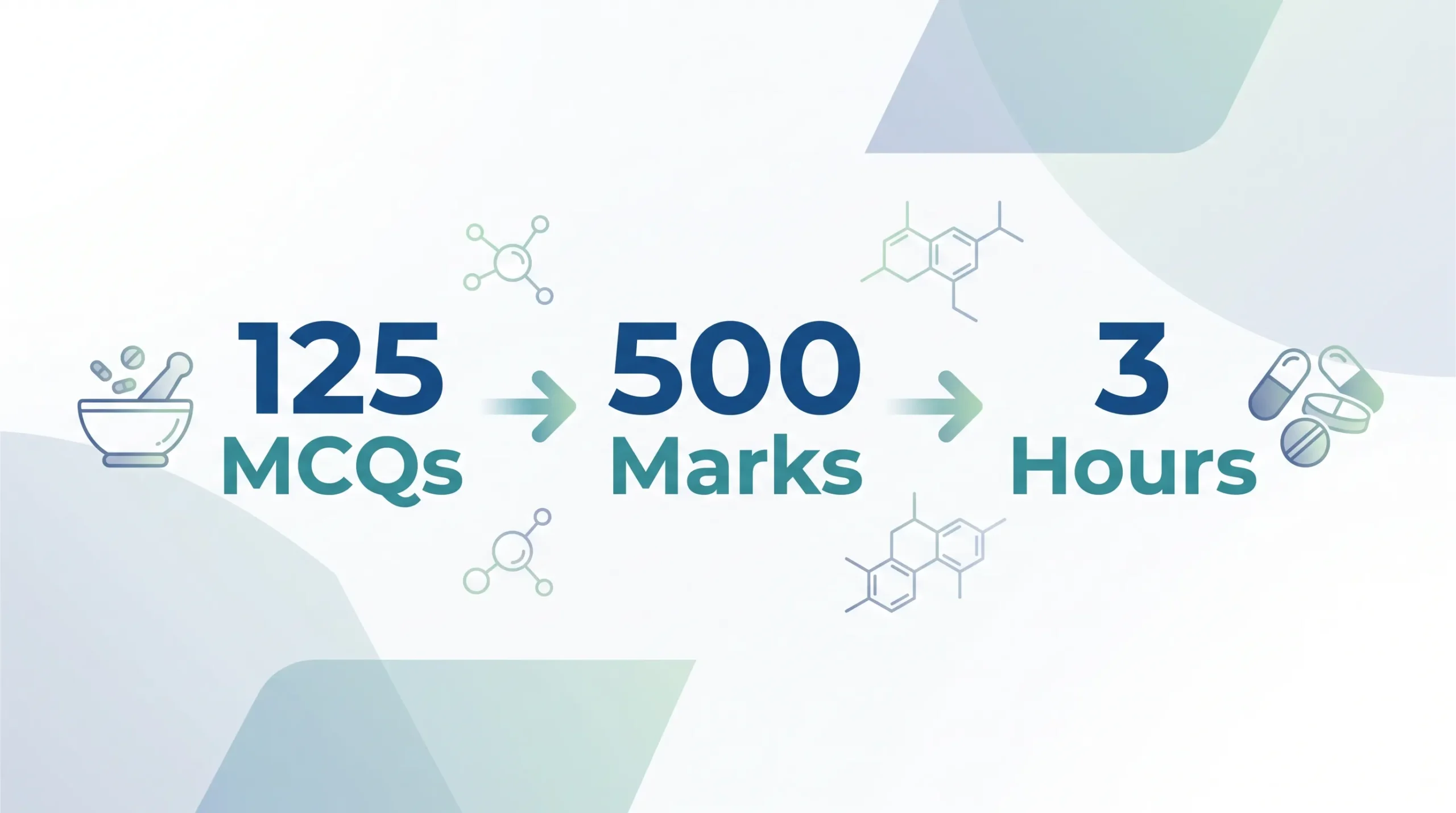
GPAT (Graduate Pharmacy Aptitude Test) is typically conducted for 600 marks, based on 125 multiple-choice questions (MCQs), each carrying 4 marks. The exam duration is usually 3 hours. So when people ask about GPAT total marks, this 500-mark structure is the benchmark most official notifications have followed in recent cycles — but always cross-check the latest NBEMS bulletin for your exam year, since formats can be revised.
Understanding the GPAT Exam Pattern
The GPAT Exam Pattern is designed to test conceptual clarity across your entire B Pharm syllabus — not rote memorization. Here’s a simplified view:
|
Component |
Typical Detail |
|
Mode |
Computer-Based Test (CBT) |
|
Total Questions |
125 MCQs |
|
Total Marks |
500 |
|
Duration |
3 hours |
|
Negative Marking |
Usually 1 mark deducted per wrong answer |
|
Subjects Covered |
Pharmaceutics, Pharmaceutical Chemistry, Pharmacology, Pharmacognosy, Pharmaceutical Analysis, Pharmaceutical Jurisprudence, Biochemistry, Microbiology, etc. |
Because of negative marking, the GPAT paper pattern rewards strategy as much as knowledge. Guessing blindly can actually hurt your score, so it’s worth training yourself to recognize when to attempt and when to skip.
So, What Are GPAT Qualifying Marks?
This is where many students get confused — total marks and qualifying marks are not the same thing. The gpat qualifying marks refer to the minimum percentile or score a candidate needs to be considered “qualified,” which often varies by category (General, OBC, SC/ST, PwD) and by year, since it’s based on relative performance, not a fixed number. In other words, scoring well out of 500 doesn’t automatically mean you’ve “cleared” GPAT in the eligibility sense — your percentile relative to other candidates matters too.
GPAT 2026 Category-Wise Cut-Off
|
Category |
General-UR |
General – EWS |
OBC-NCL |
SC |
ST |
General – PwD |
OBC-NCL PwD |
|
Score |
213 |
180 |
177 |
142 |
116 |
104 |
100 |
|
Percentile |
96.26 |
90.82 |
90.09 |
76.47 |
59.19 |
48.98 |
45.71 |
|
Rank |
2059 |
4979 |
5431 |
12820 |
22213 |
27489 |
29552 |
Why the GPAT Paper Pattern Matters for Your Strategy
Knowing the GPAT paper pattern isn’t just trivia — it shapes how you should study. Since every question carries equal weight but subjects vary in volume and difficulty, smart students allocate revision time based on:
- High-weightage subjects (like Pharmaceutical Chemistry, Pharmaceutics, and Pharmacology)
- Topics with consistent repetition across past years
- Areas where negative marking risk is highest (calculation-heavy questions)
GPAT 2026 pattern
|
Syllabus |
No. of Questions |
Maximum Marks |
|
Pharmaceutical Chemistry & Allied Subjects |
38 |
152 |
|
Pharmaceutics & Allied Subjects |
38 |
152 |
|
Pharmacognosy & Allied Subjects |
10 |
40 |
|
Pharmacology & Allied Subjects |
28 |
112 |
|
Other Subjects of B. Pharm course |
11 |
44 |
|
Total |
125 |
500 |
At EBPA, our GPAT preparation courses are structured around this exact pattern — topic-wise mock tests, timed practice, and performance analytics — so you’re not just studying randomly, you’re studying smart. Look at our courses.
A Quick, Honest Reality Check
We know GPAT can feel overwhelming — 125 questions, 3 hours, and your entire B Pharm syllabus staring back at you. But here’s the thing: once you understand the gpat total marks system and how qualifying marks work, the anxiety shrinks into a manageable plan. It’s not about knowing everything; it’s about knowing how the exam is built and playing to that structure.
Frequently Asked Questions
What are the GPAT total marks?
GPAT is typically conducted for 150 marks across 150 MCQs, though you should verify this against the current year’s official notification.
Is there negative marking in GPAT?
Yes, most recent patterns include negative marking — commonly 1 mark deducted per incorrect answer. Confirm specifics for your exam year.
What are gpat qualifying marks?
Qualifying marks/percentile vary by category and year, based on relative candidate performance, not a fixed score.
How many subjects are covered in the GPAT paper pattern?
The exam spans core B Pharm subjects including Pharmaceutics, Pharmacology, Pharmaceutical Chemistry, Pharmacognosy, and more.
Where can I prepare for GPAT systematically?
EBPA offers structured GPAT preparation courses with topic-wise tests and performance tracking.