Human Anatomy, Physiology and Pathophysiology | Pharmacy
Categories: Pharmacy

About Course

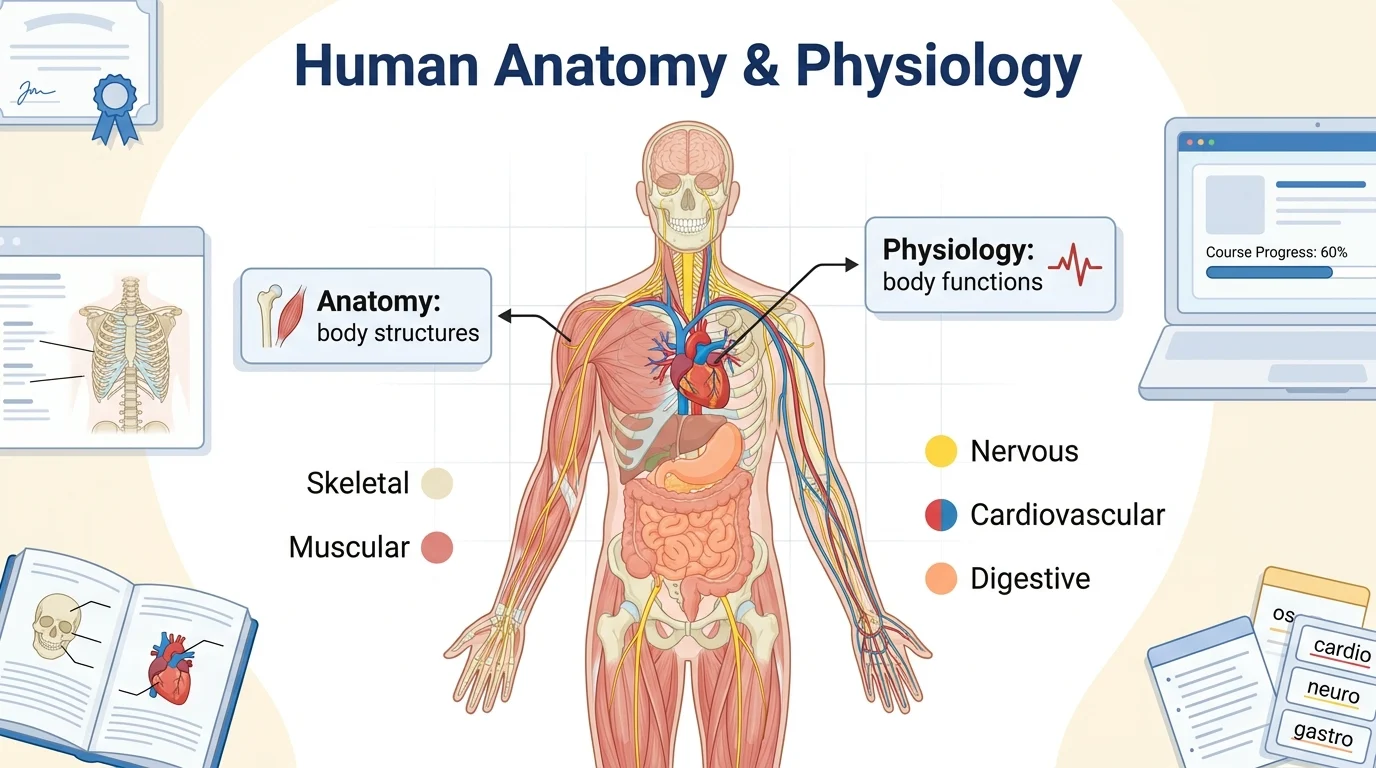
A Human Anatomy and Physiology course introduces learners to the structure and function of the human body. If you wonder what is anatomy and physiology course about, it covers cells, tissues, organs, and major body systems such as skeletal, muscular, nervous, cardiovascular, respiratory, digestive, urinary, endocrine, and reproductive systems.

The course also explains anatomy vs physiology: anatomy studies body structures, while physiology studies how those structures work. An anatomy and physiology course for beginners usually starts with basic medical terminology and builds toward complex body functions and clinical applications.

Many students ask, is anatomy and physiology hard? It can be challenging because it involves memorization and understanding processes, but clear lessons and regular practice make it manageable. How long is an anatomy and physiology course depends on the program, ranging from a few weeks to a full semester. Some learners also seek a free anatomy and physiology course with certificate online.

Show More

What Will You Learn?

  • Students will learn the basic structure and organization of the human body.
  • Students will understand the functions of major body systems.
  • Students will learn key anatomical and physiological terminology.
  • Students will understand how the body maintains internal balance and homeostasis.
  • Students will explore the relationship between body structure, function, and disease.
  • Students will build a foundation for healthcare, pharmacy, and drug action studies.

Course Content

Introduction
The Introduction topic in the Human Anatomy and Physiology course gives learners a clear foundation for studying the human body. In the lesson on the Scope of Anatomy and Physiology, students explore how anatomy focuses on body structures, while physiology explains how those structures function together to maintain life. Learners are introduced to major body systems, levels of organization, and the relationship between normal function and health. The lesson on the Definition of various terminologies builds essential vocabulary, including anatomical position, directional terms, body planes, cavities, organs, tissues, and homeostasis. This topic prepares beginners for deeper study in later modules.

  • Scope of Anatomy Physiology and Pathophysiology
    00:00
  • Definition of various terminologies
  • Homeostasis

Human Cell Structure: Cell Organelles and Their Functions

Tissue in Human Anatomy, Physiology & Pathophysiology
A tissue is an organized group of similar cells, along with their extracellular material, that performs one or more specialized functions. The human body contains four basic tissue types: 1. Epithelial tissue 2. Connective tissue 3. Muscle tissue 4. Nervous tissue

The Skeletal System
Under this topic we will cover the following Structure and functions of bones Axial Skeleton Appendicular Skeleton Classification of Joints Types and movements of joints Disorders of joints

Scroll to Top